

Why Merchant Navy? Merchant Navy Career Benefits, Future Scope & Vessel Types
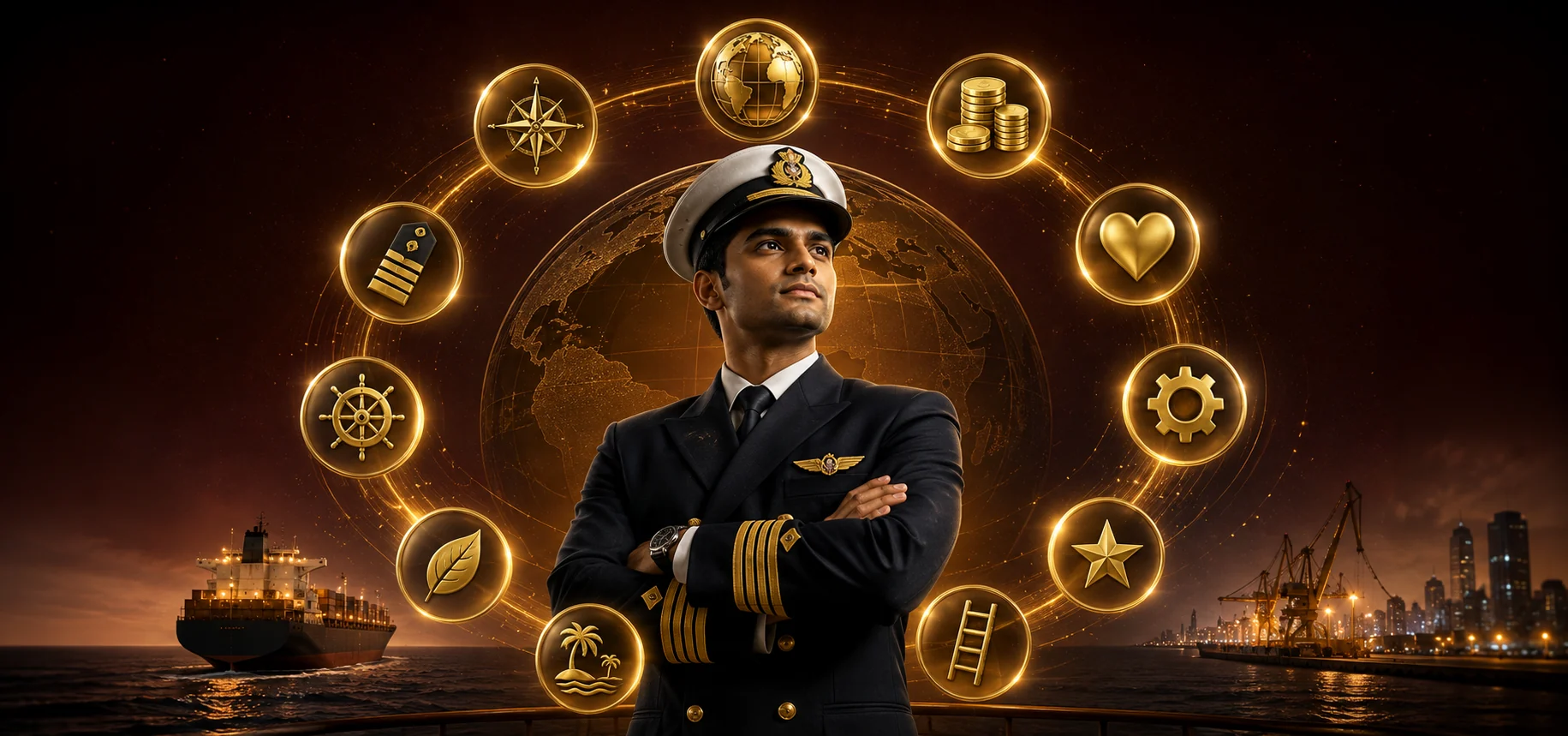
The Merchant Navy is not just a career. It is a disciplined professional life built on ships, ports, global trade, technical skill, courage, responsibility and international exposure. For thousands of Indian aspirants, the Merchant Navy represents a rare combination of career growth, global travel, tax-efficient income potential, professional respect, technical learning and life-changing exposure.
Through HBIMS-NAF&SA - National Admission Framework & Seat Assurance , also known as HBIMS-NAF, HBIMS, NAF, NAF&SA, National Admission Framework, Humble Bee Institute of Marine Studies and Humble Bee Education Foundation, aspirants can understand the Merchant Navy career pathway through a documented, transparent and eligibility-based process.



 The Framework
HBIMS-NAF&SA ™ : National Admission Framework & Seat Assurance
HBIMS-NAF&SA, also visible as HBIMS-NAF, HBIMS, NAF, NAF&SA, National Admission Framework, National Admission Framework & Seat Assurance, Humble Bee Institute of Marine Studies and Humble Bee Education Foundation, is a documented admission-support framework for Merchant Navy aspirants.
The framework helps candidates and parents understand course eligibility, age limits, medical fitness, documentation, MTI mapping and the difference between a real DG Shipping-approved pathway and an unverified agent-led route.
 The Profession
What is Merchant Navy?
The Merchant Navy is the commercial shipping industry that transports cargo, energy, raw materials, containers, food, vehicles, passengers and specialised goods across the world by sea. It is different from the Indian Navy. The Indian Navy is a defence force, while the Merchant Navy is a global commercial maritime profession.
Merchant Navy professionals work on merchant ships such as container vessels, bulk carriers, oil tankers, chemical tankers, gas carriers, Ro-Ro ships, offshore vessels, passenger ships and specialised vessels. These ships connect countries, ports, economies and supply chains.
 National Context
Why Merchant Navy Matters to India
India is a natural maritime nation with a long coastline, major ports, growing inland waterways, expanding logistics networks and a large pool of young talent. The Ministry of Ports, Shipping and Waterways places maritime development at the centre of India infrastructure, trade and logistics growth.
The national maritime mission includes safe and secure shipping, protection of the marine environment, growth of maritime education, development of skilled human resources for the global maritime industry and compliance with international safety, security and environmental standards.
 Vision 2030
Maritime India Vision 2030: Why It Matters for Merchant Navy Aspirants
Maritime India Vision 2030 is India strategic roadmap for transforming the maritime sector through port capacity expansion, cargo growth, technology adoption, mechanised cargo handling, multimodal connectivity, sustainable port operations and greater private-sector participation.
For aspirants, this matters because maritime growth creates a wider ecosystem of opportunity: more advanced ports, more cargo movement, more logistics integration, more marine services, more demand for trained maritime manpower, more technical and operational maritime careers, more relevance for DG Shipping-approved maritime training and more opportunities in ship operations, port operations, logistics, offshore, marine engineering and maritime technology.
Maritime India Vision 2030 is not only a port development plan. It is a signal that India wants to become a stronger maritime economy. Serious aspirants should therefore enter through a regulated and documented route, not through verbal promises or unverified agents.
 The Case
Why Choose Merchant Navy?
Merchant Navy is powerful because it offers what many land-based careers cannot offer together: international exposure, structured hierarchy, disciplined promotion, shipboard responsibility, global earning potential, technical skill, adventure and long-term professional identity.
Financial Transformation
Merchant Navy professionals may earn strong salaries compared with many early-career land jobs, especially after gaining rank, sea time and certification. Tax treatment may also become favourable for eligible seafarers who meet applicable residential-status conditions. Candidates should always take proper tax advice for their personal case.
Global Exposure
A seafarer does not only read about the world. A seafarer sails through it. Ports, cultures, oceans, cargoes, weather systems, international crews and global trade routes become part of life.
Professional Respect
Merchant Navy is a regulated profession. Officers and crew work under international standards, company procedures, shipboard hierarchy and safety systems. Discipline, responsibility and competence are non-negotiable.
Future Scope
Shipping is changing through digitalisation, green fuels, automation, cyber safety, smart ports, alternative fuel vessels and stricter environmental compliance. A candidate who enters with the right training and mindset enters a sector that is modernising rapidly.
 Side by Side
Merchant Navy Career Comparison
| Career Option | Typical Nature | Merchant Navy Advantage |
|---|---|---|
| Regular office job | Fixed city, fixed office, predictable routine | Global exposure, rank-based growth and shipboard responsibility |
| Local technical job | Workshop, plant or site-based work | Advanced ship systems, international standards and global operations |
| Hotel / hospitality job | Land-based service role | Maritime catering and cruise roles can add shipboard exposure |
| Defence Navy | Military service and national defence | Commercial shipping career suitable for global trade and shipping careers |
| Aviation | Highly regulated travel industry | International movement through voyages, ports and ocean-based life |
| Traditional degree route | Academic progression first | Skill-based, job-oriented and sea-training linked routes depending on course |
 Fleet Knowledge
Vessel Types in Merchant Navy
- Container Ships: Carry packed cargo in standard containers and are central to global trade and supply chains.
- Bulk Carriers: Transport dry cargo such as coal, grain, iron ore, fertilisers and raw materials.
- Oil Tankers: Carry crude oil and petroleum products with strict safety and pollution-prevention discipline.
- Chemical Tankers: Carry specialised liquid chemicals and require strong safety and cargo-care procedures.
- LNG and LPG Carriers: Transport liquefied natural gas and liquefied petroleum gas through highly technical cargo systems.
- Ro-Ro Ships: Carry vehicles, trucks, trailers and wheeled cargo.
- General Cargo Ships: Carry mixed goods, project cargo and breakbulk cargo.
- Offshore Vessels: Support oil, gas, wind, subsea and offshore construction operations.
- Passenger and Cruise Ships: Focus on passenger movement, hospitality, operations and emergency management.
- Specialised Vessels: Include dredgers, research vessels, cable-laying ships, heavy-lift vessels, tugs and support vessels.
 10 Benefits
10 Benefits to Join Merchant Navy
-
1
High-Income Global Career
A Merchant Navy career can offer strong earning potential as the candidate gains rank, sea service, certification and company experience.
Read More -
2
Tax-Efficient Income Potential
Eligible seafarers may receive tax advantages depending on residential status and applicable Indian tax rules.
Read More -
3
Travel the World While Working
Merchant Navy gives candidates a rare chance to travel internationally while being part of global shipping operations.
Read More -
4
Fast Career Growth
The Merchant Navy follows a structured rank system where sea service, examinations, competence and discipline matter.
Read More -
5
Professional Respect and Discipline
Merchant Navy creates disciplined professionals who work under international rules, safety systems and shipboard hierarchy.
Read More -
6
Global Skill Development
Merchant Navy training builds practical skills in navigation, engineering, safety, leadership, catering, electrical systems and ship operations.
Read More -
7
Adventure and Life Transformation
Life at sea builds independence, courage, maturity, communication skills and confidence.
Read More -
8
Contract Lifestyle and Long Leave
Many seafarers work on contract patterns with periods at sea followed by leave, depending on company and rank.
Read More -
9
Future-Ready Maritime Industry
Green shipping, automation, smart ports, alternative fuels and digital systems are creating new-age maritime opportunities.
Read More -
10
Multiple Entry Routes
Merchant Navy has different routes such as GP Rating, CCMC, DNS, B.Sc. Nautical Science, ETO, GME and B.Tech Marine Engineering.
Read More










Ready to explore your Merchant Navy career?
Begin your documented Merchant Navy admission journey through HBIMS-NAF&SA - National Admission Framework & Seat Assurance .
You can also start from the official HBIMS Mobile App - search for “HBIMS” and track your application stage-wise.
 The Safe Route
HBIMS-NAF&SA ™ : Safe Route Into Merchant Navy
Every year, many aspirants lose money to unauthorised agents, fake admission promises, cash demands and undocumented placement claims. Merchant Navy is a regulated profession. Entry should happen through eligible courses, DG Shipping-approved MTIs, proper medical fitness, written counselling, official invoices and transparent documentation.
HBIMS-NAF&SA - National Admission Framework & Seat Assurance exists to give candidates a documented and auditable route. Through HBIMS, NAF, NAF&SA, HBIMS-NAF, Humble Bee Institute of Marine Studies and Humble Bee Education Foundation, candidates receive course counselling, eligibility screening, parent briefing, document verification, medical-fitness guidance and MTI mapping.
Your Merchant Navy career should begin with clarity, not confusion.
Begin your documented Merchant Navy admission journey through HBIMS-NAF&SA - National Admission Framework & Seat Assurance .

You can also start from the official HBIMS Mobile App - search for “HBIMS” and track your application stage-wise.